Research Program
Research
NEXGEM studies how large-scale molecular and pathology-derived data can be translated into better cancer treatment strategies through AI, data science, and experimental validation.
Theme 01
Synthetic lethality-based precision cancer medicine
Building therapeutic strategies from genetic interactions, immunotherapy response, and patient-specific molecular context.
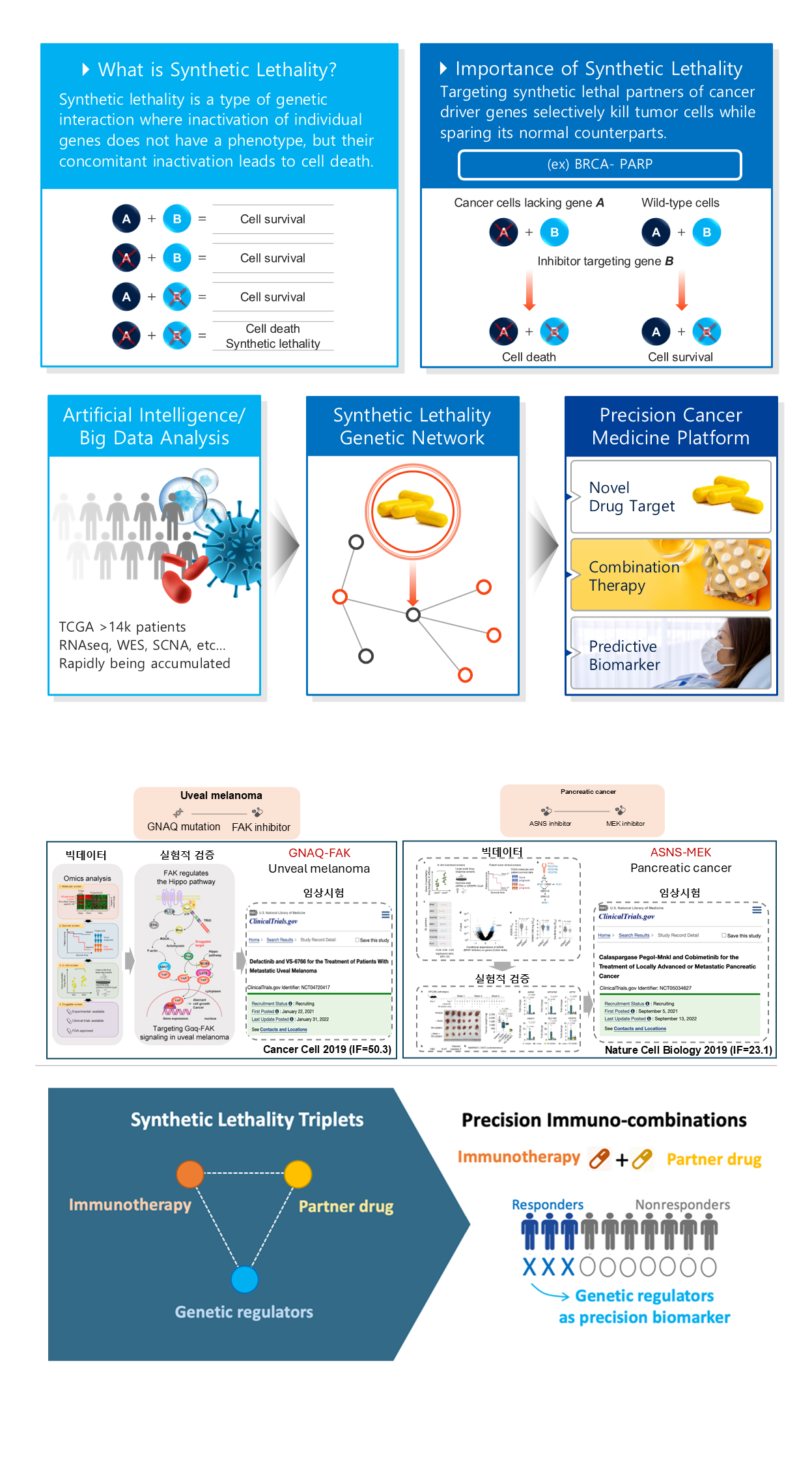
Joo has led pioneering studies based on the concept of synthetic lethality, where disabling one gene alone has little effect, but disabling both simultaneously causes cell death.
His work has focused on discovering drug targets with real clinical benefits, advancing immunotherapy, and enabling precision oncology by matching patients to effective drugs based on genetic profiles.
Samsung Foundation Grant: Introducing Triple Synthetic Lethality
Building on prior work, the lab is establishing a new concept: triple synthetic lethality, where cells die only if three genes are jointly inactivated.
- Provide a rational basis for selecting drugs for immunotherapy combinations.
- Identify biomarkers that help define the right patient groups.
- Support AI- and big data-driven therapeutic development in immuno-oncology.
Theme 02
From slides to spatial omics
Extending pathology into multi-layered molecular maps to support pathology-based precision cancer medicine.
Cancer diagnosis has long depended on tissue slides reviewed under a microscope. Spatial omics now adds molecular context directly onto tissue architecture, creating a much richer map of tumor biology.
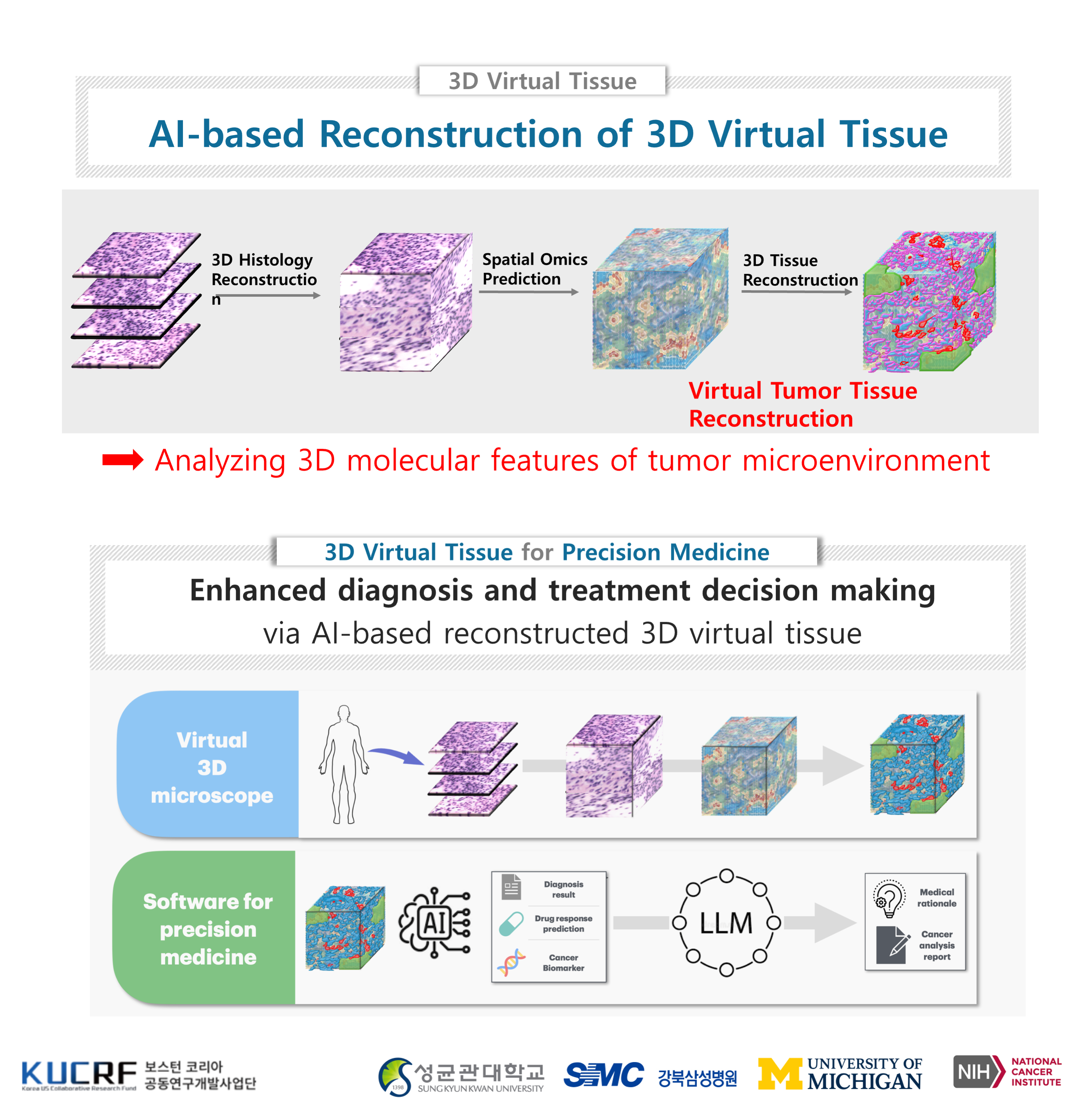
By integrating histopathology with spatial omics, the lab studies how cancer cells interact with their environments and how those interactions may explain treatment response differences across patients.
BostonKorea Grant: 3D reconstruction of tumor microenvironment characterization
We are developing AI models that predict spatial omics information and extend tissue understanding from 2D sections into 3D virtual reconstructions.
The long-term aim is precision cancer medicine driven by detailed structural and molecular maps of tumors.
Support
Funding
Our work is made possible by support from academic, philanthropic, and research funding partners.